| Author | 唐酒卿 |
| First Released | 2018-2019 |
| Source | 晋江文学城 |
| Length | 282 |
| Total Characters | 1,041,904 |
| Unique Characters | 4,100 |
| Genre | Danmei, Romance Historical, Imperial Court |
| Difficulty | Mastery |
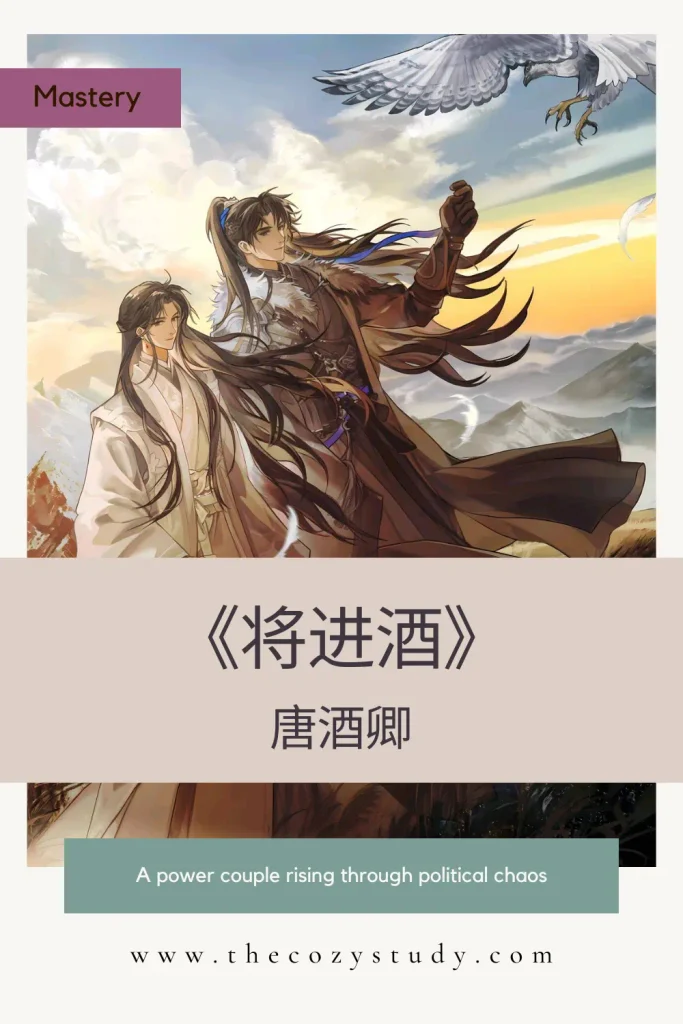
《将进酒》by 唐酒卿, known officially in English as Ballad of Sword and Wine, really surprised me; admittedly, I didn’t know what I was getting myself into when I picked up this danmei web novel. I knew very little about it, only that the plot is heavy on politics, with lots of characters and factions.
I was quite unprepared for the level of politics and complexity.
Thinking back, I feel I should have done a little bit more research and read a few more lighter historical novels before jumping into this.
Disclaimer: I read the original Chinese webnovel in Chinese. I can not comment on any of the translations or any other edition. If you are reading the physical Chinese release or a translation, your experience may differ from mine.
The Mega Plot
《将进酒》 is set in an empire divided into many regions, each controlled by competing factions. For years, a circle of entrenched aristocratic families has maintained a tight grip on both the royal family and the empire.
《将进酒》 follows many characters as they break free from this tight hold in their own ways and pursue what they believe is good for the empire and its future. Their stories matter as much as the main couple’s. They helped shape the empire. I was invested in all their stories!
The premise and plot are heavy and complex, with lots of moving parts.
With so many characters and factions, I needed an infographic to keep track of who is in which faction, which family they belong to, and who leads each one. As I was reading, I also took notes on the characters I encountered.
The author does a good job of reminding us, at the right points, who the returning character is and highlighting many important plot points related to them. They also remind us every now and then of what has happened so far, usually through the main couple updating each other on events that occurred while they were separated, or by updating another character who had been away from the main events for a while.
The Romance
The romance and interactions between the main couple often take a back seat. I would say on average every 10-15 chapters is a chapter or two that’s entirely focused on their relationship.
If you’re after a romance-focused story with lots of sweet, fluffy romance, then 《将进酒》 isn’t the one!
However, although there isn’t much focus on their relationship, that doesn’t mean it isn’t important. Their relationship influences many of their decisions and the story’s turning points.
In fact, their relationship shaped many other characters’ decisions and even played a major role in the final political manoeuvre.
It may be small, but extremely important.
你要娶我,两百万不够,我要千金难买的兰舟笑。
唐酒卿 《将进酒》
The perfect main couple
Shen Zechuan and Xiao Chiye are the ultimate power couple, respecting and supporting each other’s decisions while staying true to what they want in life.
Both characters grow and evolve throughout the story, as does their relationship. Yet through every change, they continue to support each other, never lose sight of their individual goals, and always choose to stand together. A couple who supports each other is my favourite type!
Their support for each other gave them the courage to pursue their goals and ultimately shaped their individual stories and paths.
Besides their support for each other, I really loved that amid all the political manoeuvres and war, they still made time for each other. Honestly, this is my favourite part of their relationship!
It’s perfect!
Gallery
There’s so much art for 《将进酒》. Here are two from the audio drama.
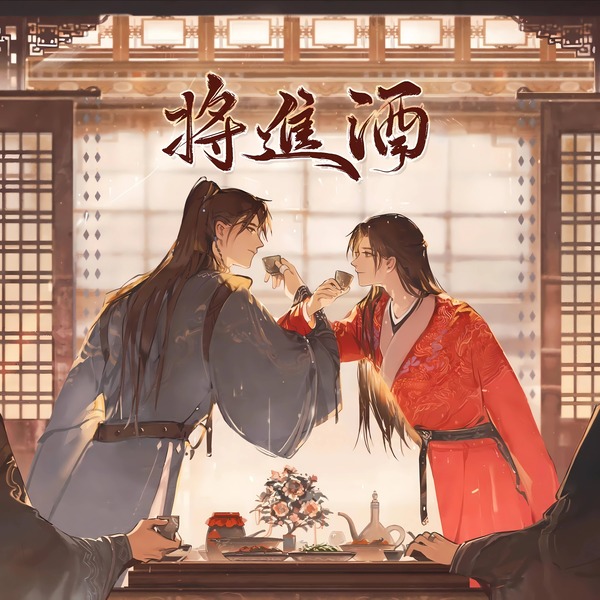
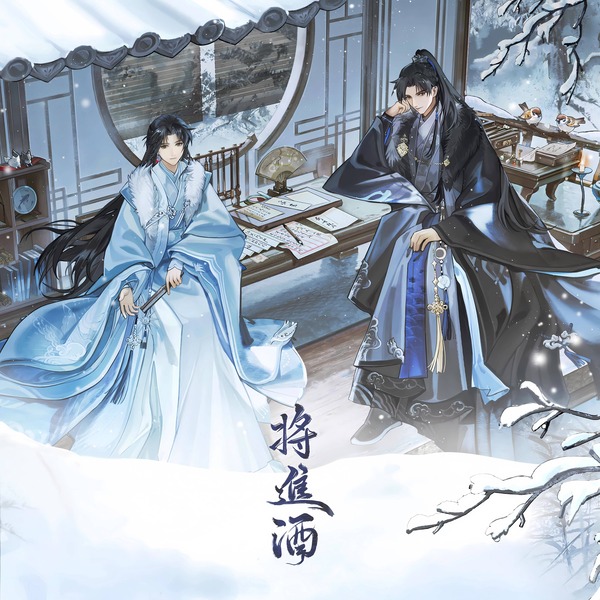
Difficulty for a Chinese second-language learner
《将进酒》 is by far the most challenging Chinese danmei web novel I’ve read so far because of its dense, historically styled prose, complex plot, and overall writing style.
Most characters have two names: a given (birth) name and a courtesy name, often bestowed by a parent or teacher when they come of age. The novel uses both interchangeably throughout. A character may initially be introduced by their given name, only to be addressed later by their courtesy name, which I found confusing. It often took me several paragraphs to realise who was being discussed, so a character map would be helpful.
Most of the characters are lords, ministers, or members of high society, so they speak formally to one another. In this world, people rarely say exactly what they mean, and their conversations are layered with subtext. Understanding these hidden meanings is essential to following the plot.
《将进酒》 is told from multiple points of view, and the point of view can change multiple times within a single chapter. At the beginning, there’s no divider to indicate a change; honestly, it’s one of my biggest pet peeves in literature. In later chapters, she includes a divider whenever the perspective changes, which I really appreciated.
这个世间,庸人有庸人的苦恼,天才也有天才的痛苦。
唐酒卿 《将进酒》
Final Thoughts
Once I’ve gained more experience with historical novels, particularly those with political themes, I plan to reread 《将进酒》. Although I enjoyed it, I missed a lot because I couldn’t fully understand everything that was said or happening. Many of the political manoeuvres went completely over my head.
It feels unfair to judge a book without fully understanding everything that happened.
As for whether I recommend 《将进酒》 to Chinese second-language learners, I would definitely advise against jumping into it without preparation. Don’t read it simply because it’s popular and well-known; it’s a long and difficult novel.
If you do decide to pick this up, leave a comment below and let me know how it’s going.